
Art Basel Miami Beach 2026
Joaquín Segura
About the fair
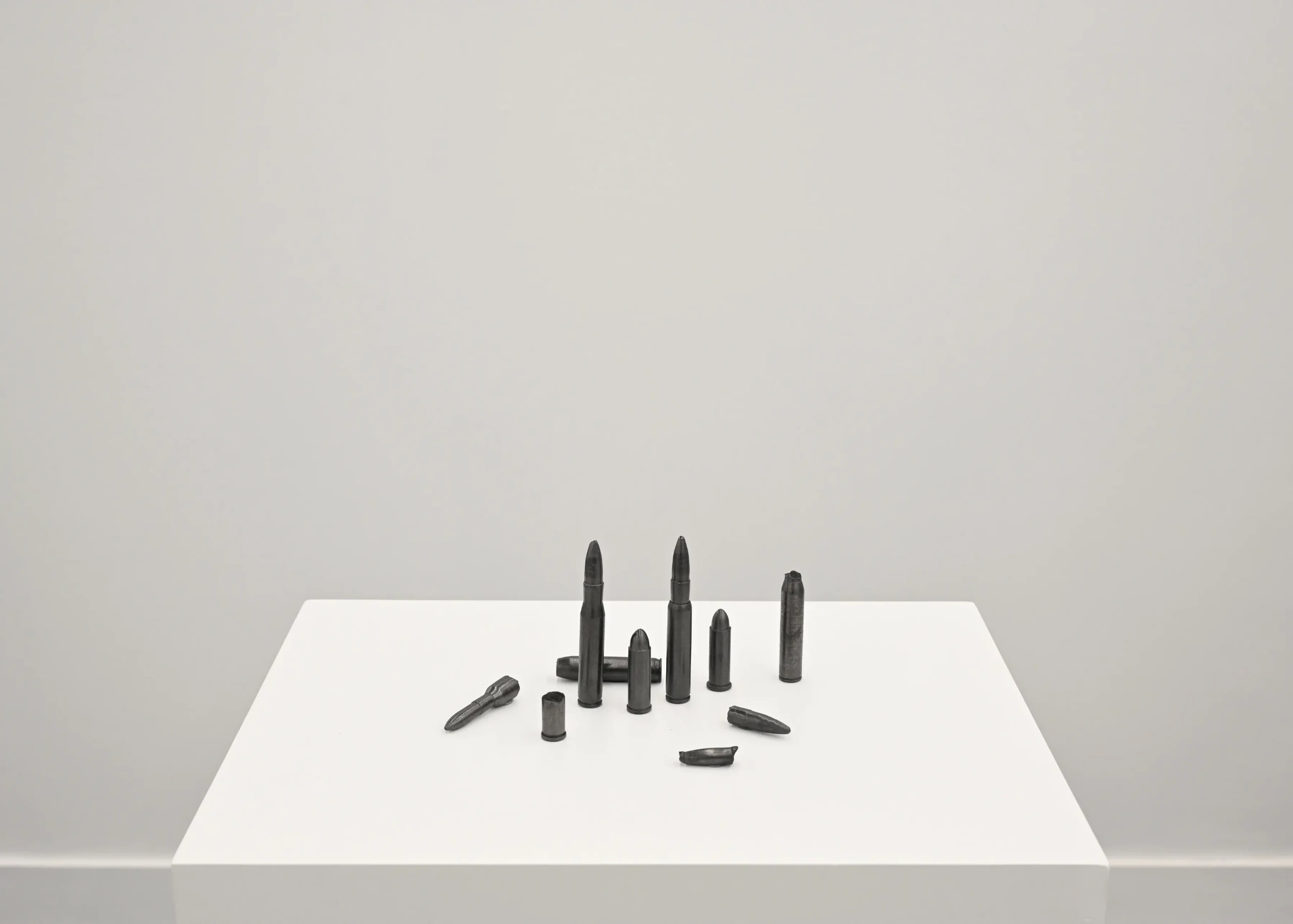
Latin American history in the 20th century is a narrative of fragments: as such, these can be read in an infinite number of configurations. Each of these accounts may be as accurate as the next one: a polyphonic chorus that suggests at the same time an impending widespread collapse and a myriad of potential futures. For the better part of the past two decades, Joaquín Segura has constructed a poignantly personal imaginary which feeds on an almost metaphysical reading of the radical mindset. Segura has built a practice deeply rooted in a material and formal reflection on political discourse and the phenomenology of ideological superstructure. His most significant projects in the past several years involve a vision of artistic practice as both a sociological tool and a scathing battle for memory and the possibility of counternarrative. Absence, silence, loss and State violence are recurrent tropes in a body of contemplative work fascinated by the ever present cracks in our common everyday. A time will come when anger will feel like a breeze on the face is both an ambitious recount of the exhaustive field work the artist has developed in different territories such as Argentina, Cuba, Mexico and the US during the past ten years, and most significantly, a key group of works to understand the near future of a solid, evolving visual language that distinguishes Segura as one of the leading Mexican artists of his generation. Building on distinct formal strategies deployed recently by the artist, the thematic guidelines that lie behind this group of specifically developed works examine contemporary interventionism, the failed-state narrative, post-authoritarian regimes and the fraught relationship of the US and Latin America through the recurring implications of its foreign policy. Cuba, History Will Absolve Me, and North American Espionage in Mexico (all 2026) are the most current iterations of Éminence grise, an ongoing series of paintings started in 2019 which suggest a direct relationship between Latin American geometrical abstraction and the current state of counter-hegemonical apparatuses seen through the physical decay of propaganda materials sourced and kept by the artist in a growing personal archive. Untitled (Astiz) (2026), is a handwoven haute-lisse tapestry that depicts a textile rendition of an altered photograph of one of the most infamous characters in the darkest episode of the contemporary history of Argentina, in a formal approach that constitutes an iconoclastic gesture towards one of the many faces of evil in Latin America. Untitled (Cóndor) (2026), is a bare-bones installation in which the artist uses custom-made graphite projectiles to trace the outline of the six countries involved in the most aggressive intelligence operation the US implemented under Kissinger policy to stop the ‘Red Threat’ in the 1970s. Two bronze casts, a medium never explored by the artists before, represent oversized versions of stray bullets extracted from the artist’s archive, its form reminiscing an affecting rereading of 20th century modernist sculpture. These works all attest to the taxonomical impetus of a critical gaze fascinated with the nuances of power and contradiction in an age of pressing uncertainty.